Used Car Buyer’s Guide: How to Find, Check and Buy Safely in 2026

What Is a Used Car and Why Buying One Requires Extra Care
A used car is any vehicle that has previously been owned and driven by at least one person before the current sale — and while buying one can save you thousands compared to new, it comes with risks that new-car buyers never face. Sellers are not always transparent about a vehicle’s past. Mileage can be wound back, accident damage can be hidden under fresh paint, and some cars on the market are outright stolen. Understanding exactly what you are buying is the single most important step in a second-hand purchase.
This guide walks you through every stage of the process: where to search, what to inspect, how to verify history, and how to negotiate a fair price — so you can buy with confidence rather than regret.
The Used Car Market in 2026: Key Numbers You Should Know
The UK used car market remains one of the largest in Europe, with several million transactions taking place every year. But volume does not mean safety. According to Which?, a significant proportion of private used car listings contain inaccurate or incomplete information — whether intentional or not.
carVertical data from 2024 paints a sobering picture across Europe:
- 24% of used cars in Poland show signs of mileage manipulation (2024 carVertical data)
- 19% of Romanian used cars have odometer discrepancies (2024 carVertical data)
- 8% of German used cars show rollback signs — lower than average but still one in twelve (2024 carVertical data)
- Lithuania leads the EU at 35% of vehicles showing mileage fraud indicators (2024 carVertical data)
- Average odometer rollback across affected vehicles: between 60,000 and 100,000 km (carVertical data)
These numbers matter whether you are buying domestically or importing from mainland Europe — and imported vehicles are increasingly common on UK forecourts and private listings.
Where to Find a Used Car: Platforms and What Each Offers
There is no single best place to buy a second-hand vehicle. Each channel has advantages and trade-offs.
| Channel | Typical Price | Buyer Protection | Risk Level | Best For |
|---|---|---|---|---|
| Franchised dealer | Higher | Strong (statutory rights + warranty) | Low | Peace of mind buyers |
| Independent dealer | Mid-range | Moderate (statutory rights apply) | Low–Medium | Budget-conscious buyers |
| Private seller | Lower | Weak (sold as seen) | Higher | Experienced buyers |
| Online marketplace (auction) | Variable | Varies by platform | Medium–High | Bargain hunters |
| Car supermarket | Competitive | Good (returns policy usually offered) | Low–Medium | High-volume, fast purchase |
When buying privately, you lose the consumer protections that apply to dealer sales under UK consumer law. The car is typically sold as seen, which makes independent verification far more important.
How to Check a Used Car’s History Before You Buy
A physical inspection tells you a lot — but it cannot reveal what happened to a car five years ago on a motorway in Germany, or whether its odometer reading has been altered. That is where a vehicle history report becomes essential.
carVertical aggregates data from over 1 billion records across 31 countries and generates a full report in approximately 40 seconds. A report covers:
- Mileage timeline — every recorded reading plotted chronologically to spot anomalies
- Accident and damage history — including repair records and insurance write-off status
- Theft checks across multiple national and international databases
- Number of previous owners and country history
- Outstanding finance — so you do not inherit someone else’s debt
- Technical inspection records (MOT equivalents in multiple countries)
For a used car purchase of any significant value, the cost of a report is negligible compared to the potential downside. Use code movcareu for 20% off.
Used Car Inspection: What to Check in Person
No history report replaces a hands-on inspection. Use the following checklist when you visit a vehicle:
Exterior
- Check panel gaps — uneven gaps between doors, bonnet and boot lid suggest accident repair
- Look at paint under bright light for colour inconsistencies or overspray on rubber seals
- Inspect the sills and wheel arches for rust
- Check all glass for chips, cracks or replacements (mismatched date stamps on windows are a red flag)
Interior
- Wear on the pedals, steering wheel and seat bolsters should match the claimed mileage
- Check all electronics — windows, mirrors, air conditioning, infotainment
- Look under floor mats and in the boot for signs of water ingress or musty smells
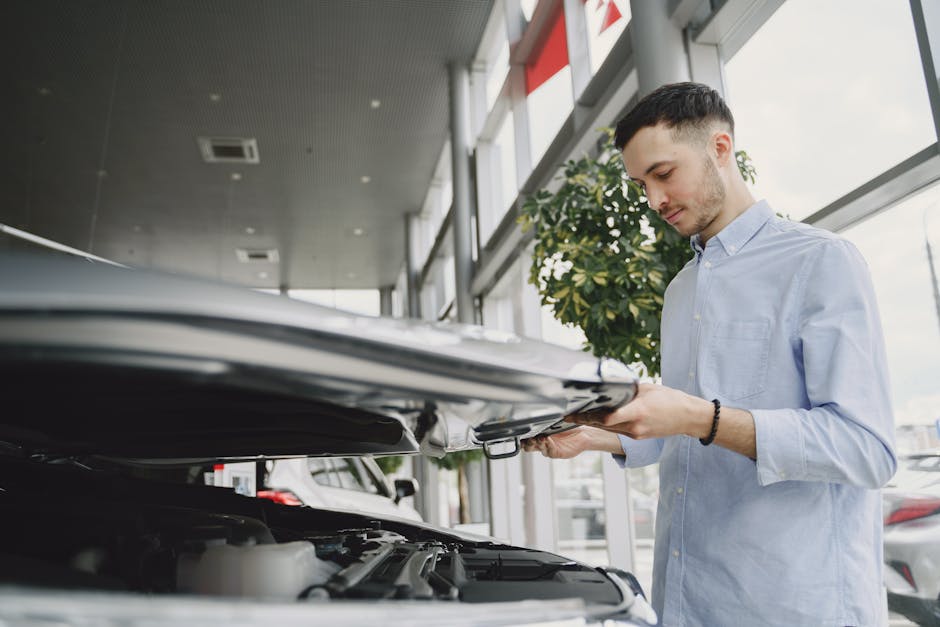
Under the Bonnet
- Check oil level and condition — milky oil suggests a head gasket issue
- Look for fresh sealant around the engine, which can indicate recent repair
- Inspect coolant colour and level
- Look for frayed belts or corroded terminals
Test Drive
- Drive at varying speeds and listen for knocks, rattles or vibrations
- Test braking in a straight line — pulling to one side indicates an issue
- Check the gearbox shifts cleanly through all ratios
- Watch the temperature gauge warm up steadily and stabilise
For a full checklist, see our dedicated guide: How to Check a Car Before Buying: The Complete Inspection Checklist (2026).
Used Car Pricing: How to Know If You Are Paying a Fair Price
Pricing a second-hand vehicle is not an exact science, but several factors reliably affect value:
- Mileage — lower genuine mileage commands a premium; but beware of suspiciously low readings on older vehicles
- Service history — full documented history can add 10–15% to resale value
- Number of owners — fewer owners typically means higher value, though a single careful owner for ten years is worth more than three owners in two years
- Colour — mainstream colours (silver, grey, black, white) depreciate less and sell faster
- Spec level — optional extras rarely return their full cost at resale, but popular features (sat nav, heated seats, reversing camera) do help
Cross-reference any asking price against at least three comparable listings on major platforms. If a price is significantly below market rate, treat it as a warning sign rather than a bargain — it almost always means something is wrong.
For detailed pricing benchmarks, read our guide to Used Car Prices UK: What to Expect and How to Avoid Overpaying in 2025.
Avoiding Common Used Car Scams
The second-hand car market attracts fraud. The most common schemes in 2026 include:
Clocking (Odometer Fraud)
As noted above, mileage manipulation affects a material proportion of all used car sales across Europe. Digital odometers are not immune — they can be reset using inexpensive equipment. Always cross-reference mileage against service stamps, MOT records and a verified history report.
Cut and Shut (Welded Write-Offs)
Two written-off vehicles welded together and sold as one. The resulting car is structurally unsafe. A history report will flag write-off status on both registered identities, but you should also look for weld seams in unexpected locations during a physical inspection.
Stolen Vehicles
France alone records over 200,000 vehicle thefts per year, and Germany approximately 20,000 (carVertical data). Across Europe, 40% of stolen vehicles are never recovered — many re-enter the market with altered plates and falsified paperwork. Running a VIN check catches most of these, as the VIN itself cannot be changed without leaving evidence.
Finance Outstanding
If the previous owner still has an active finance agreement against the car, the finance company retains an interest in the vehicle — and can repossess it from you even if you paid in good faith. A history report checks for outstanding finance and protects you.
Negotiating the Price: Practical Tips
Armed with a history report and inspection notes, you are in a strong position to negotiate. Here is how to approach it:
- Lead with facts, not feelings — a documented service gap or minor bodywork repair is a quantifiable reason to reduce the price
- Get quotes for any work needed before negotiating — a mechanic’s estimate for brake replacement is more persuasive than a vague mention
- Be willing to walk away — the second-best car at the right price beats the best car at the wrong price
- Never negotiate on a car you have not driven — you need both pieces of information before committing
- Understand the seller’s position — a private seller who has already bought a replacement car is more motivated than a dealer with fifty units in stock
What Documents Should a Used Car Come With?
When buying in the UK, you should expect to receive:
- V5C logbook — the registration document; check the VIN matches the car and the seller’s name matches the document
- MOT certificate — verify independently at gov.uk using the vehicle’s registration number
- Service history — stamped book or digital records; check dealer stamps are from real businesses
- Any warranty documentation — understand exactly what is covered and for how long
- Finance settlement letter (if applicable) — confirming any outstanding finance has been cleared
Missing documentation is not automatically a dealbreaker, but each absent document increases your risk and should be reflected in the price.
FAQ
How do I check a used car’s history in the UK?
You can run a free basic check using the DVLA’s MOT history tool at gov.uk, which shows MOT results and mileage readings at each test. For a comprehensive report — covering accident history, theft records, outstanding finance, and cross-border data — a paid service like carVertical is the most thorough option, covering over 1 billion records across 31 countries. Use code movcareu for 20% off.
What mileage is too high for a used car?
There is no universal cut-off, but as a general guide: petrol cars above 100,000 miles require more scrutiny, while diesel engines often run well beyond 150,000 miles with proper maintenance. More important than the number is whether the mileage is genuine and whether the service history supports it. A 120,000-mile car with full documented history is often a safer buy than an 80,000-mile car with a suspicious odometer reading.
Is it safer to buy from a dealer or a private seller?
Buying from a dealer offers stronger legal protection under the Consumer Rights Act 2015 — you have the right to reject a faulty car within 30 days. Private sales are typically sold as seen, meaning you have far less recourse if problems emerge. For private purchases especially, a vehicle history report and independent inspection are essential.
What are the biggest red flags when buying a used car?
Key warning signs include: a price significantly below market rate, a seller reluctant to let you inspect or test drive the car, mismatched VIN numbers on the car and documents, uneven panel gaps suggesting accident repair, a service history with gaps or suspicious stamps, and a seller pushing for cash only with no paperwork. Any single one of these warrants walking away or demanding a satisfactory explanation before proceeding.
Can a used car still have finance outstanding?
Yes — and this is more common than many buyers realise. If finance was not settled before the sale, the finance company retains a legal interest in the vehicle and can repossess it even from an innocent buyer. Always check for outstanding finance as part of your history report, and ask the seller for written proof that any finance has been cleared.
How much should I pay for a used car history report?
carVertical reports typically cost between £10 and £20 depending on the depth of check selected. Using code movcareu gives you 20% off. On a car purchase of even a few thousand pounds, this is among the best-value due diligence you can do — a single hidden problem discovered before purchase can save you far more than the report costs.
What is the best age and mileage combination for a used car?
A commonly cited sweet spot is three to five years old with between 30,000 and 60,000 miles — old enough to have absorbed the steepest depreciation (typically 40–60% in the first three years), but young enough to still carry some manufacturer warranty and use relatively modern safety technology. That said, the condition, history and price of the specific car matter more than age and mileage alone.
Summary: Buying a Used Car Safely in 2026
A used car purchase is one of the largest financial decisions most people make outside of property — and unlike property, there is no mandatory survey, no conveyancing solicitor and no chain of disclosure obligations. The entire burden of due diligence falls on the buyer. That is not a reason to avoid the second-hand market, which offers genuine value at every budget level, but it is a reason to approach every purchase methodically: research the market price, inspect the car in person, verify the documents, and always — always — run a history report before handing over money. The combination of a thorough physical check and a carVertical report covers the vast majority of risks that catch buyers out. Do both, negotiate from a position of knowledge, and you will be well placed to make a purchase you are still satisfied with years down the line.
AutoCheck24 is an official carVertical affiliate partner. When you purchase a report through our links, we receive a commission at no extra cost to you. The 20% discount is applied automatically via our partner link.